
Sustainability
Dine well. Give it back to the earth.
Every Tilipan piece is made from plants and ends as soil. No plastic in the ground, no guilt at the table — just beautiful ware that knows when to bow out.
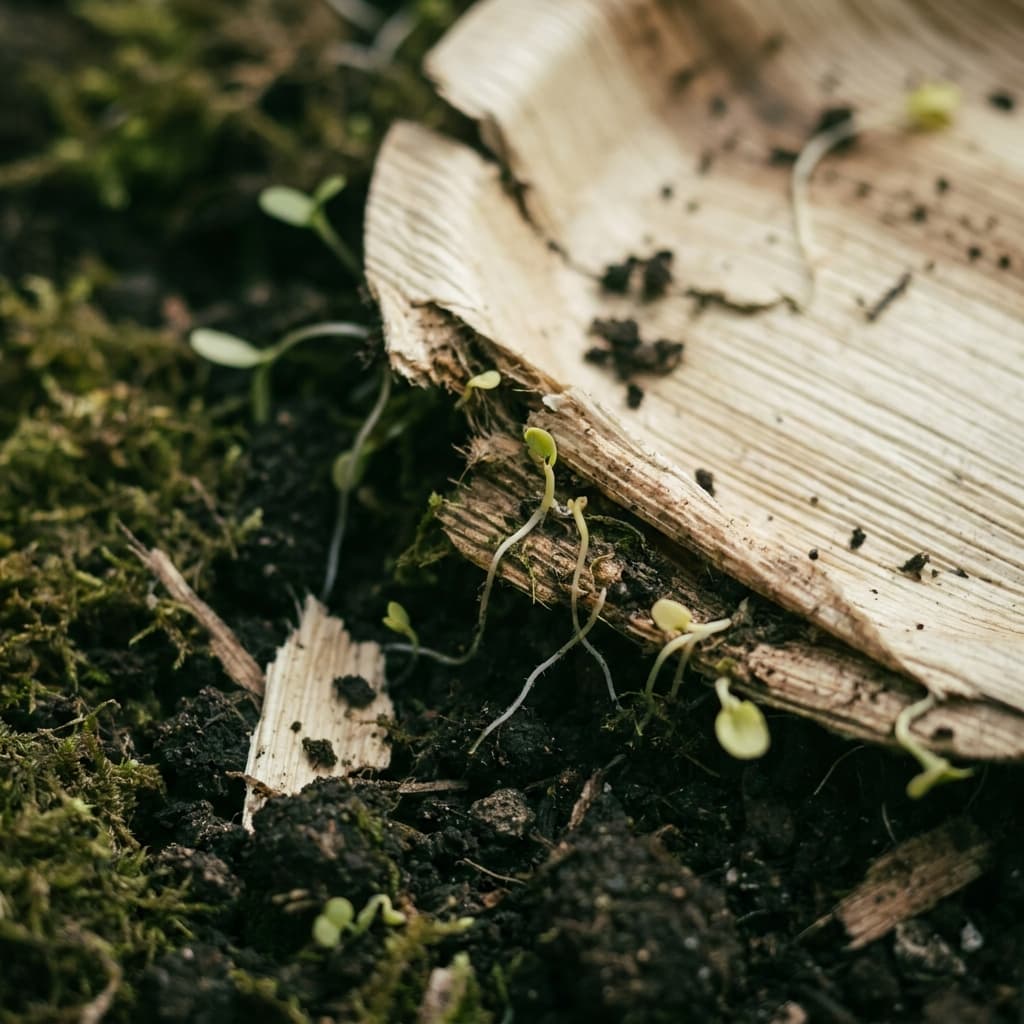
- 100%
- natural plant fibre
- 0%
- plastic, wax or coating
- 60–90
- days to fully compost
- 0
- trees felled to make it
The honest comparison
Better than the alternative — in every direction.
Versus plastic
Conventional plastic tableware can linger for 400+ years and shed microplastics. Ours is plant fibre that composts in months.
Versus foam
Polystyrene foam is rarely recyclable and never compostable. Tilipan returns to soil — no special facility required.
Versus coated paper
Most 'paper' plates carry a thin plastic or wax lining that blocks composting. Ours has no liner at all.
Compostable, not just biodegradable.
“Biodegradable” only means something breaks down eventually — sometimes into microplastics. “Compostable” is the stricter, regulated promise: a return to non-toxic soil in a defined time. Every Tilipan piece is compostable. More questions →
After the meal
How to compost your Tilipan.
Scrape & rinse
Clear off any leftover food. A quick rinse is plenty — no scrubbing needed.
Add to compost
Drop it in your home compost bin or pile, or your municipal organics collection.
Let nature work
In 60–90 days at home (faster commercially) it breaks down into healthy soil.