
Areca Palm Leaf Plates: The Natural Cycle of Sustainable Tableware
Discover the journey from fallen forest floor to elegant table settings. Learn why areca palm leaf plates define circularity in professional catering and event hosting.
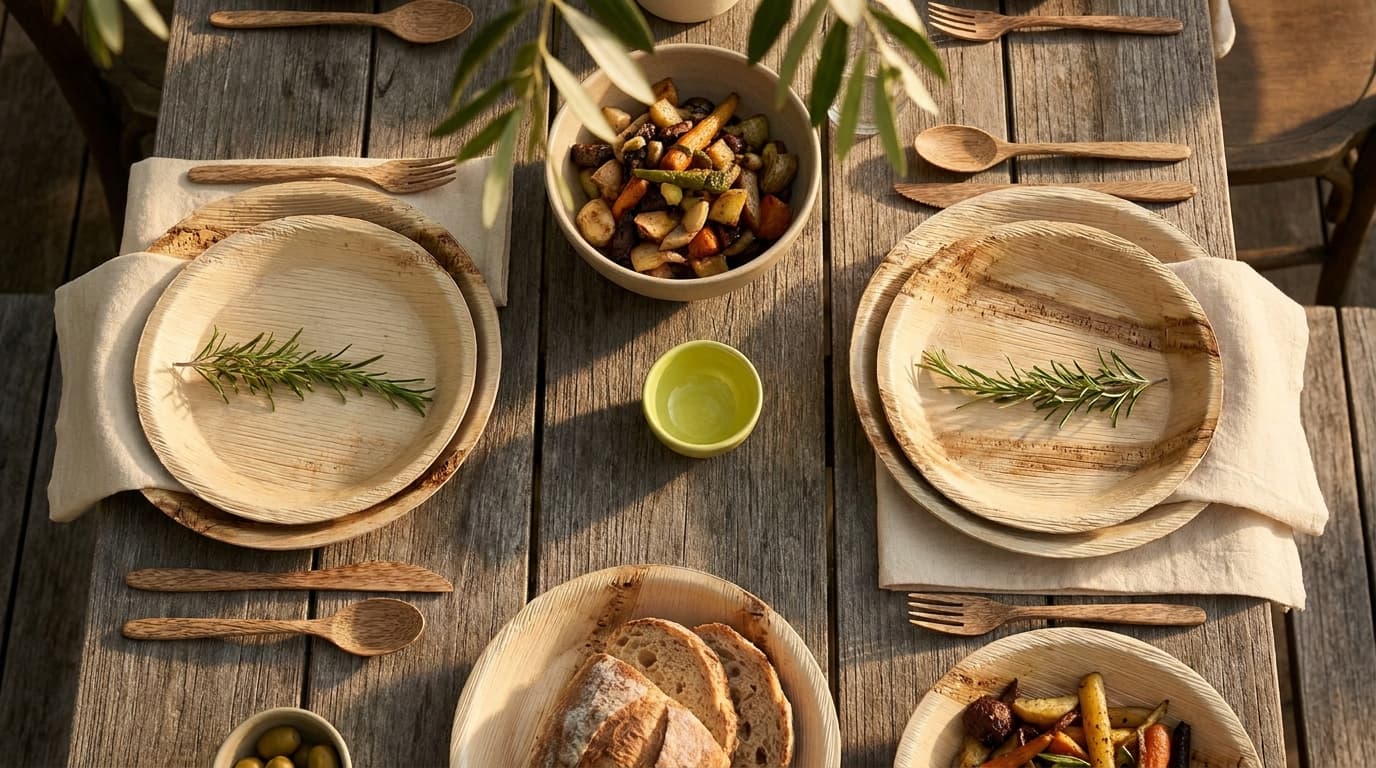
Areca palm leaf plates represent one of the most authentically circular products in modern hospitality, offering a refined, natural solution for those prioritising environmental integrity. By utilising fallen sheaths from the Areca catechu tree—a species native to the tropical landscapes of South Asia—this tableware transforms agricultural byproduct into elegant, functional pieces for events and dining. As the industry shifts toward circularity, understanding the material origins of our areca palm leaf plates helps planners and caterers make informed choices that benefit both the environment and the table. By favouring products that require minimal energy input and zero chemical additives, businesses can effectively align their procurement strategies with global net-zero aspirations.
The Lifecycle of Areca Palm Leaf Plates
The production of these plates begins not with a harvest, but with collection. Areca palm trees naturally shed their large, fibrous leaf sheaths several times throughout the year as part of their biological growth cycle. Local communities gather these fallen sheaths from the forest floor, a practice that ensures the trees remain completely undisturbed. This collection method creates a valuable secondary income stream for rural farming communities while preventing the sheaths from becoming forest-floor waste that might otherwise be burned. By repurposing this organic material rather than treating it as agricultural waste, the manufacturing process functions as a model for circular resource management.
According to industry observations, the raw sheaths are cleaned using only pressurised water to remove natural debris, such as soil or organic sediment. This cleaning phase is critical, as it avoids the bleaches, synthetic resins, or chemical binders common in industrial disposables like plastic-coated paper or polystyrene. Once cleaned, the sheaths undergo a precise thermal treatment. They are heat-pressed at approximately 120°C, a process that simultaneously sterilises the material and moulds it into durable, liquid-resistant shapes using bespoke metal dies.
Because this method relies entirely on mechanical pressure and heat, the finished tableware remains 100% natural. There are no additional glues or wax linings required to provide the structural support or moisture resistance found in standard disposables. This simplicity in production is what makes these items a preferred choice for our areca palm range, as it ensures a high-performance, non-toxic final product that is as safe as it is beautiful. Furthermore, the low energy consumption during the manufacturing phase—compared to the high-heat extrusion of plastics—contributes to a significantly lower carbon footprint per unit.
Performance and Reliability in Catering
For professional caterers and event planners, areca palm leaf plates solve the long-standing conflict between convenience and conscience. Unlike lightweight paper products or thinner bagasse alternatives, these plates possess a unique, fibrous structural integrity derived from the natural vascular bundles of the palm leaf. They are inherently resistant to leaks and can easily support hot, oily, or heavy meals without softening or losing their shape.
This performance reliability is essential for high-pressure catering environments where both presentation and durability are non-negotiable. Whether serving a piping hot curry, a delicate salad, or a heavy steak, the material maintains its rigidity, preventing the dreaded ‘soggy plate’ syndrome that often plagues alternative disposables.
Beyond their functional merits, the aesthetic appeal of these plates is unmatched. Each piece features a unique, wood-like grain that adds a rustic, organic elegance to any table setting. Because no two palm sheaths are identical, the colouration—ranging from cream and pale yellow to deep tan and mottled brown—provides a tactile, bespoke experience. For hosts looking to elevate an event without relying on excessive plastic decor, these plates provide an inherent beauty that serves as a conversation starter. Whether you are choosing areca palm round plates for a formal wedding dinner or areca palm trays for a high-traffic corporate buffet, the natural variation in colour and texture ensures that every place setting feels curated rather than mass-produced.
Environmental Impact and Disposal
The environmental benefits of areca palm tableware extend far beyond their initial use phase; they represent a "cradle-to-earth" product lifecycle. Being 100% compostable, they do not require industrial composting facilities to break down, unlike many "compostable" bioplastics that need specific high-heat, controlled conditions.
In many home compost systems, these items decompose into nutrient-rich soil within six to eight weeks. They essentially return the organic matter to the soil, completing the nutrient cycle. This provides a tangible zero-waste solution for event planners who wish to minimise the environmental footprint of their gatherings. By integrating these products into your service, you are supporting a supply chain that respects the forest, provides stable employment for harvesters, and offers a truly biodegradable conclusion to the guest experience.
When disposing of these plates, there is no risk of microplastic pollution or persistent chemical residues. They break down naturally through the action of aerobic bacteria and fungi, enriching the soil with carbon and nitrogen. This makes them a superior choice for outdoor events, festivals, and eco-conscious catering businesses looking to divert waste from landfills and reduce the strain on municipal waste management systems.
Material Comparison: Areca Palm vs. Bagasse vs. GFM (Green Fibre Moulding)
Understanding the nuances between sustainable materials is essential for choosing the right product for your specific service requirements. While areca palm is a premier natural choice, other materials like bagasse and standard moulded fibre (GFM) serve different roles within the hospitality landscape.
| Feature | Areca Palm Leaf | Sugarcane Bagasse | GFM (Green Fibre) |
|---|---|---|---|
| Source | Fallen tree sheaths | Sugarcane byproduct | Recycled wood/paper pulp |
| Aesthetics | Unique, wood-like grain | Uniform, matte finish | Smooth, utilitarian |
| Strength | Highly rigid and heat stable | Excellent for general service | Variable; moderate rigidity |
| Chemicals | Zero additives | Possible trace bleaching | Often requires binders |
| Compostability | Fully home compostable | Fully home compostable | Industrial compostable |
As the table illustrates, while sugarcane bagasse and GFM offer excellent solutions for high-volume, low-cost catering, areca palm stands out as the premium option for aesthetic-driven, eco-conscious events. Bagasse, a by-product of the sugar industry, is pressed and often bleached, resulting in a clean, uniform look that suits contemporary, minimalist settings. GFM, or Green Fibre Moulding, is often sourced from recycled paper or wood pulp, making it a sustainable choice for large-scale disposable needs, though it often requires chemical binders to achieve structural integrity. Areca palm, conversely, relies solely on the natural strength of the palm sheath, requiring no additives, which makes it the gold standard for those prioritising clean-label sustainability.
For those interested in exploring these options further, our sustainability page details our broader commitments to circularity and our efforts to partner only with producers who uphold ethical labour practices. Our products page also provides a comprehensive view of how these materials compare for specific event needs, helping you select the perfect tableware for your next occasion. By making the switch to circular materials like areca palm, you are not just choosing a piece of tableware—you are choosing a path toward a more regenerative and mindful future for the hospitality industry.
Frequently asked questions
Areca palm plates require cutting down trees?
No. The areca palm tree naturally sheds its leaf sheaths. We collect these fallen sheaths from the forest floor, meaning no trees are ever harmed or harvested.
Are these plates treated with chemicals?
No. The production process uses only water for cleaning and high-temperature heat-pressing to shape the plates. No chemicals, bleaches, or synthetic coatings are added.
Can I use these plates for hot or oily food?
Yes. The fibrous nature of the areca leaf provides excellent structural strength, making them resistant to heat and liquid penetration, even with heavy or oily foods.
How should I dispose of the plates after an event?
These plates are 100% compostable and can be placed in a home compost bin, where they will naturally break down into soil-enriching organic matter.
Sources
- prakritii.com — prakritii.com
- agrileaf.in — agrileaf.in
- shreeimpex.com — shreeimpex.com
- envome.com — envome.com
- arbhuenterprises.com — arbhuenterprises.com
Set a beautiful table — then compost it.
More from Compostable Tableware
Selecting Compostable Tableware: A Performance-First Guide
True sustainability requires balancing material performance with rigorous safety standards. Learn how to choose the right disposableware for your next event.
Read · 5 min→Selecting Compostable Tableware: A Performance-First Guide for 2026
True sustainability in hosting requires aligning material performance with menu needs and waste infrastructure. Discover how to navigate your procurement choices.
Read · 5 min→Selecting Compostable Tableware: An Expert Material Guide
True sustainability in event planning begins with material transparency. Learn how to align your menu needs with the right compostable solutions.
Read · 5 min→